


Turning Hope into Impact: Crossing Rivers and Rough Roads to Unite for Good at Laiban ALS Center
- Rotary Club of Upper East Side Antipolo
- May 5
- 4 min read
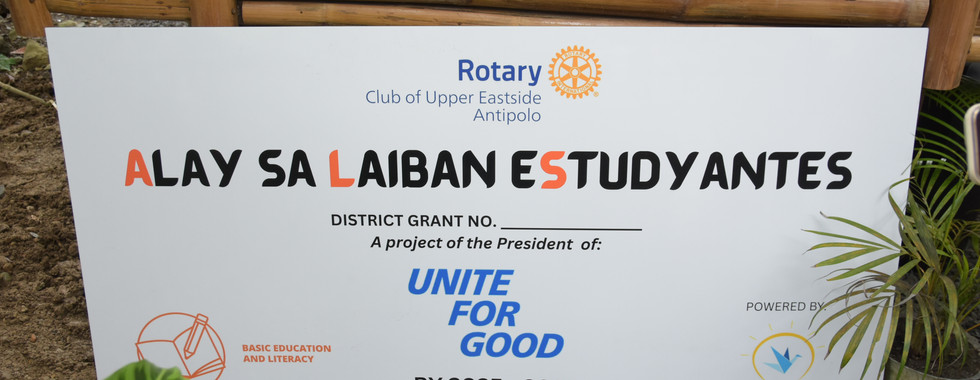
In the remote, sun-drenched highlands of Barangay Laiban, Tanay, Rizal, the call of a school bell is often replaced by the rushing sound of water. For the learners of this far- flung community, education is not a simple walk down the street; it is a test of endurance. In 2025, a new landmark of resilience has risen: the improved Alternative Learning System (ALS) Center Kubo—Alay sa Laiban Estudyantes by the Rotary Club of Upper East Side Antipolo (RC UESA).
The journey to reach the least, the last, and the lost learners in Laiban is a feat of determination. To reach this mountainous enclave, RCUESA under the leadership of Good President Victoria Baterina-Solis, faced a daunting logistical battlefield, navigating a rugged path that required crossing eight river channels.
















The challenges were immense: traditional delivery trucks could not survive the river crossings; instead, materials were hauled via specialized elevated jeepneys and manual labor; the isolation of the site led to skyrocketing labor and transport expenses, threatening the project’s completion; unpredictable weather often turned the eight rivers into impassable torrents, pausing construction for weeks at a time. In consultation with the Barangay Captain, Hon. Antonio A. Estrellado and residents, the committee decided that the construction of the ALS Center Kubo be facilitated at the mainland and delivered once completed. Other repairs of the existing facility will be done by the carpenters of the barangay under the supervision of the Barangay Captain with 50-50 percentages on labor cost and materials.
ALS Teachers and the ALS mobile teacher watched the progress of the project as they requested the completion of ALS Center Kubo in time for the second semester SY 2025-2026. The urgency of the project lies on the commitment on time-on task with the learners currently enrolled in the program.
Rejecting the "one-size-fits-all" approach to infrastructure, RCUESA designed a center that breathes Filipino identity. The ALS Center Kubo serves as a modern sanctuary for learning, utilizing the classic bahay kubo silhouette to ensure natural ventilation in the tropical heat.
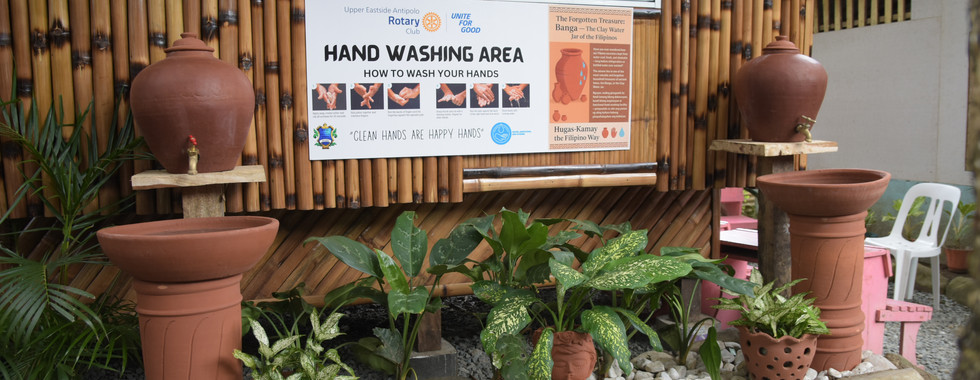
The crown jewel of the facility is its clay pot handwashing station. By using traditional Filipino pottery (banga) as the primary water vessels, the project achieves a unique fusion. It promotes indigenous Filipino craftsmanship and traditions in an everyday setting. The clay pots provide a low-cost, eco-friendly alternative to plastic or metal fixtures, keeping water naturally cool and reducing the facility"s carbon footprint.
The handwashing facility is critical for health and disease prevention. During the Hope Creating term with the kind support and leadership of PDG Pope Solis, the renovation of the Panunuluyan, a dormitory that caters to learners who needed to cross rivers and trek through steep trails for hours started. Due to lack of reliable electricity in the area, a non-profit organization, 'Solar Hope', recognized the need and stepped in to bridge the energy gap through Mark Napao. They installed solar power systems at the Panunuluyan and transformed the facility into a literal beacon of light.
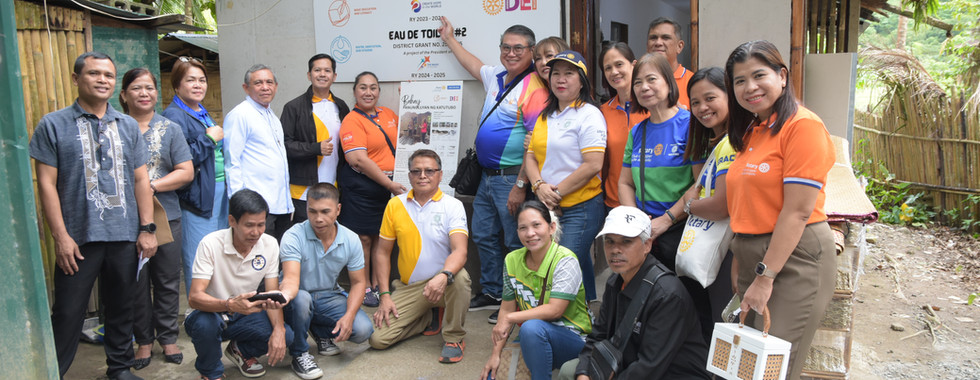
While light feeds the mind, basic sanitation nourishes human dignity. RCUESA under CP Dennis Uy, obtained a District Grant through IPDG Bobby Zamora, to provide the Panunuluyan with complete modern sanitation facilities. The project ensures that the learners have access to clean toilets and proper hygiene stations named “Eau de Toilet”. In a remote setting, these amenities are not luxuries—they are essential components that prevent illness and allow students to focus entirely on their studies rather than their basic survival needs.
Under the 'From Trash to Treasures' initiative, a thoughtful project led by GP Victoria Baterina-Solis, recycled Rotary shirts were transformed into practical pillows and pillowcases. This sustainable effort directly benefits the Panunuluyan, providing comfort while promoting environmental consciousness through creative upcycling. A community-driven “shelter”—Panunuluyan was part of the turned-over of facilities. Panunuluyan represents the search for a welcoming home through the synergy of several partners and donors.
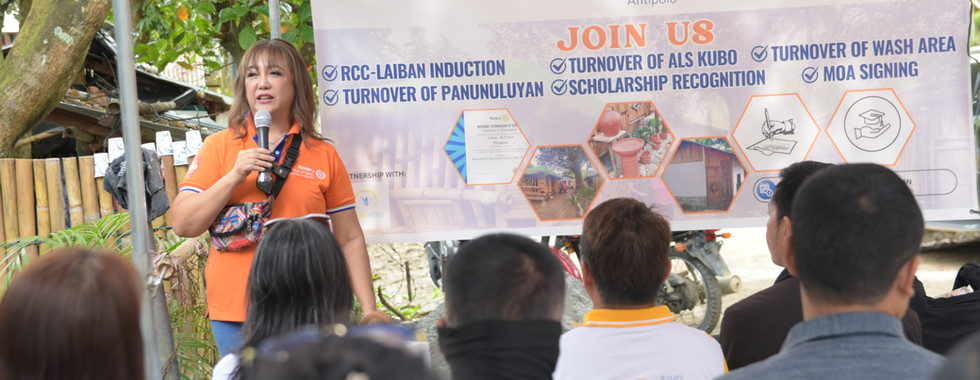
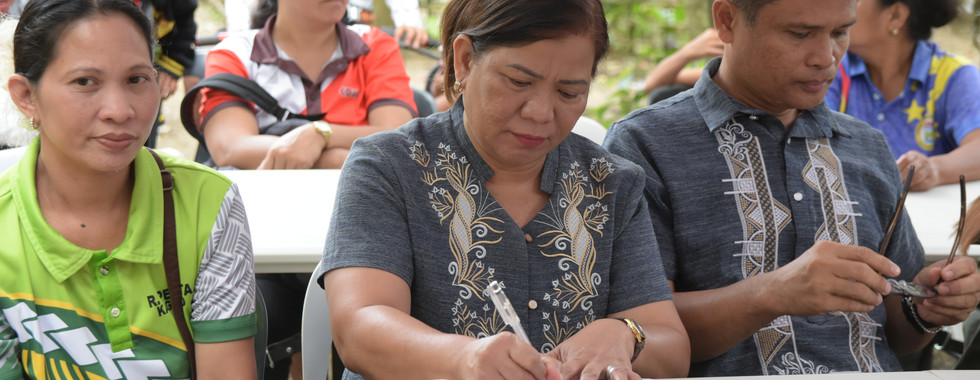
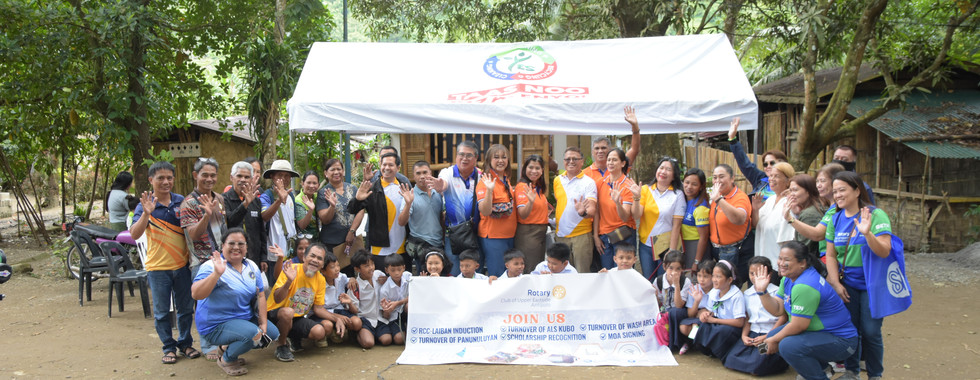
The turn-over ceremony and Memorandum of Agreement signing was held on 12 January 2026 at Laiban, Tanay, Rizal, and was attended by RCUESA GP Victoria Baterina- Solis, PDG Pope Solis, PP Ariel Julgan, PP Lorylee Uy, Rtn. Aileen Isidro-Carbonell, District RCC Chair Genna Santos, District RCC Vice-Chair Gene Arabit, PP Jerome Antiporda, AG Susie Cabral, and RCUESA RCC representatives Lilibeth Taganas, Meliza Sacro, and Kristen Concepcion. The LGU and DepEd were represented by Hon. Antonio A. Estrellado, Barangay Captain of Laiban, Hon. Orlando Surbano, Barangay Captain of Malibay, General Nakar, Quezon, Vilma P. Abueme, School Head of the Laiban Integrated School, Marck Anthony Castro, School Head of Laiban Elementary School, Eden Ninalaga, District ALS Coordinator, Dante Catacata, ALS Mobile Teacher, Joel Dulagan, ALS Mobile Teacher, and Sherly V. Repanyo, ALS Facilitator Laiban Community Learning Center.
Another highlight of the activity was the Induction of the RCC-Laiban. This is a self- sustaining community model that ensure greater impact of the project to the community. RCC-Laiban is composed of non-Rotarian residents—the people of Laiban—who take an active leadership role in their own development. The induction formally empowers the mountain community to manage and oversee the ALS Center Kubo projects rather than relying on periodic visits from the Rotary Club partner.
This center is more than a building; it is a lifeline for ALS learners—out-of-school youth and adults who have faced financial or geographic barriers to formal schooling. In a community where electricity is often a luxury, the new center provides a dedicated space for these "Resilient Dreamers" to gain the literacy and vocational skills needed for a better future. The successful completion of the Laiban ALS Center Kubo stands as a testament on the mantra of Rotary to Unite for Good. It proves that no mountain is too high and no river too deep when a community is committed to the belief that every Filipino, no matter how remote, deserves the right to learn.
Written by: Rtn. Aileen I. Carbonell, Rotary Club of Upper East Side Antipolo


Comments